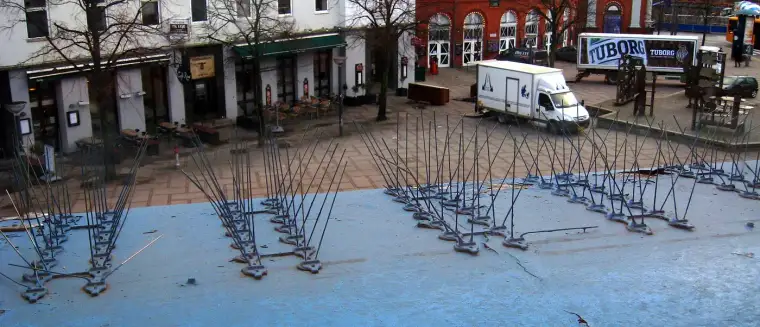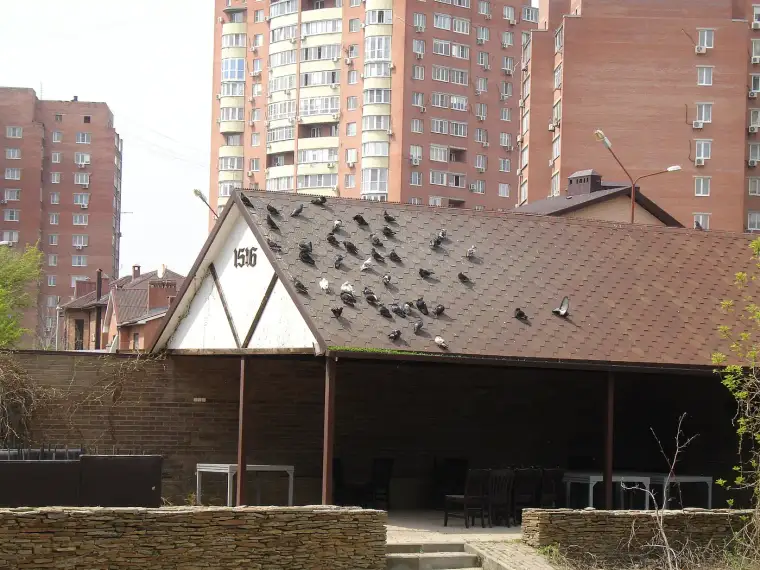
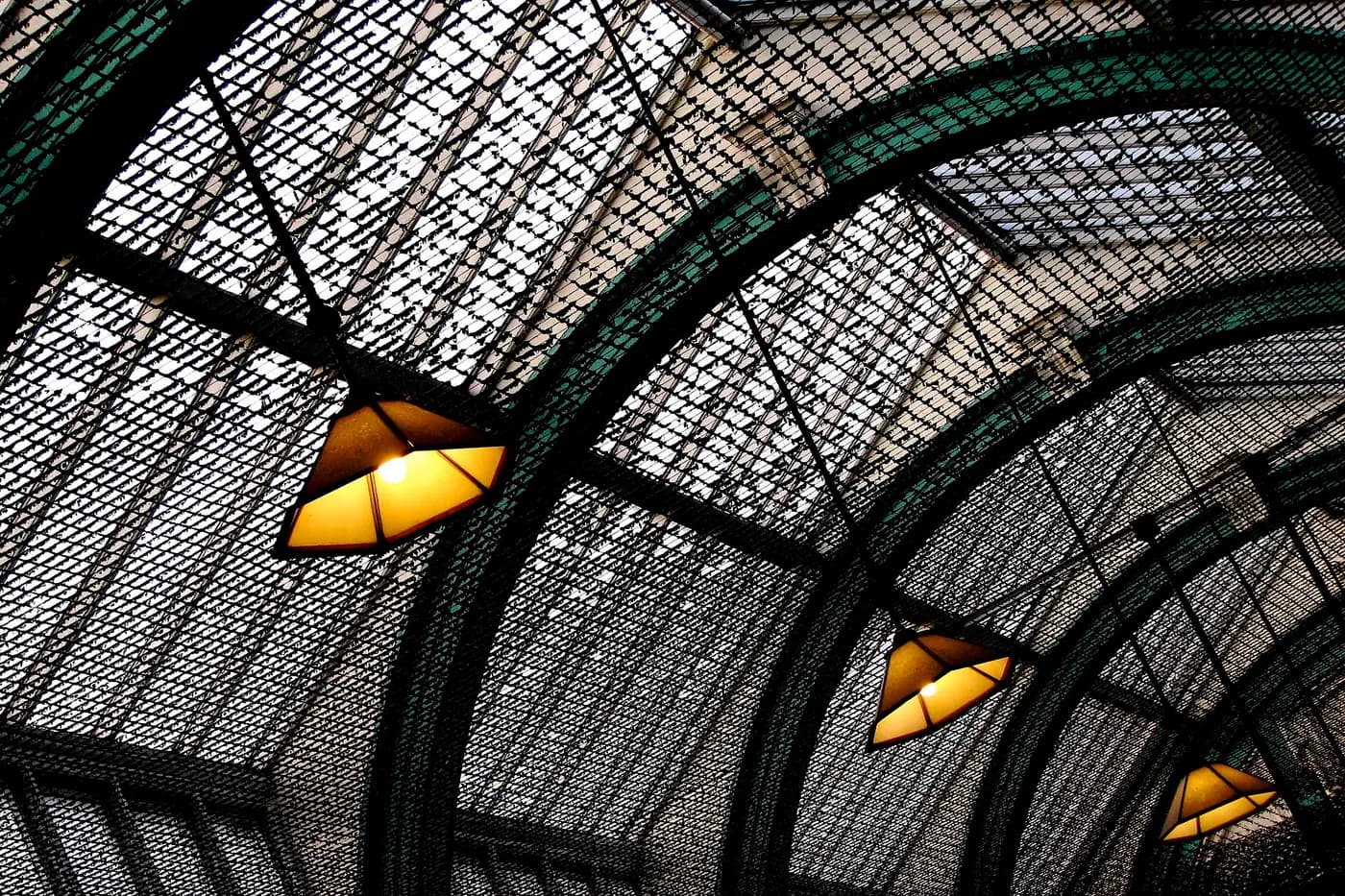
Where birds roost or nest across a whole area, such as a courtyard, light well, balcony, recessed window, plant deck or loading bay, spikes and wire only go so far. Netting physically excludes them, so there is nowhere left to land.
We use UV-stabilised, high-strength polyethylene netting fixed to a tensioned stainless-steel wire frame. Mesh size is matched to the bird, and the colour is chosen to blend with the building so the finish stays neat.
What to look for
- Birds roosting or nesting in an enclosed or recessed area
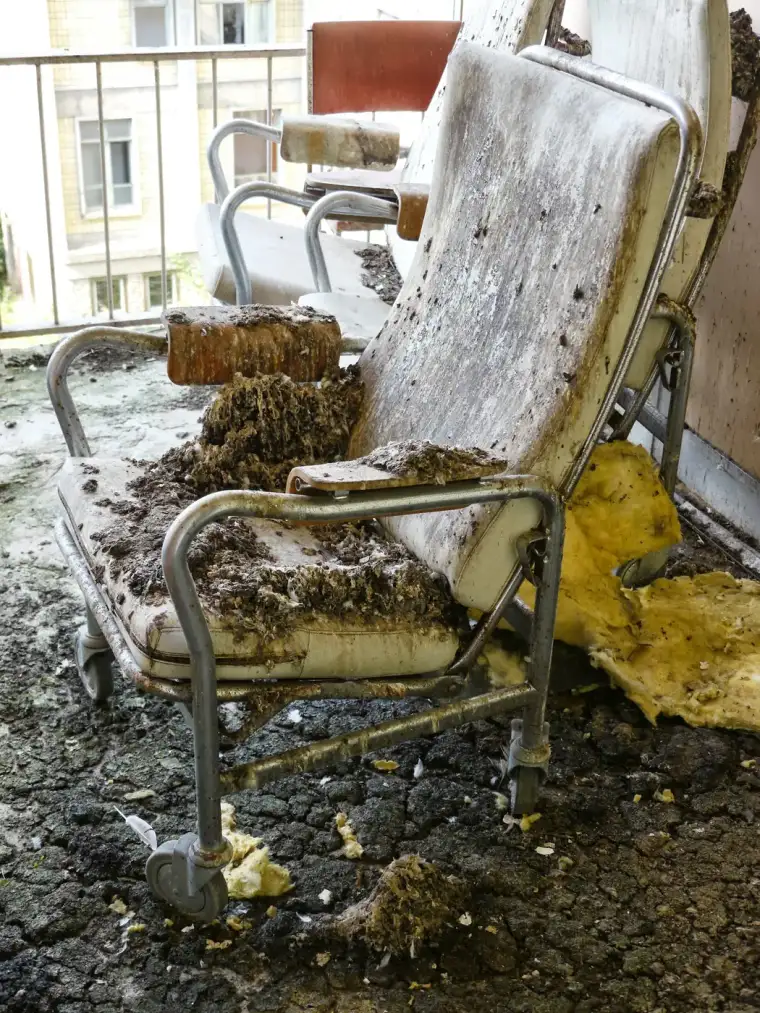
- Droppings building up in courtyards, light wells or on balconies
- Spikes or wire that birds have learned to work around
- Gulls nesting on flat roofs or plant decks
- Pigeons nesting under solar panels or in building voids

Why installation quality matters
Poorly fitted netting sags, tears and traps birds, creating a welfare problem and a worse eyesore than before. The fixings, tension and mesh size are what make netting work long term.
Our installers survey the structure, choose the correct fixings for brick, stone, steel or concrete, and fit access zips or hatches wherever you need to reach plant or windows.
How we deal with it
Survey & specification
We measure the area, identify the bird species and specify mesh size, colour and fixing method for the structure.
Clean
Any guano, nests and debris are removed and the area sanitised before installation. Active nests are left until they are vacated.
Install
A perimeter wire frame is fixed and tensioned, and the netting is laced to it tightly with access zips where required.
Inspect
We check the finished install for gaps and offer periodic inspections, which is useful on commercial sites.
Keeping it from coming back
- Net enclosed areas before birds start nesting, ideally late autumn or winter.
- Include access zips anywhere maintenance staff need to reach.
- Have netting inspected after major storms on exposed buildings.
- Pair with solar panel mesh where arrays are close to netted areas.