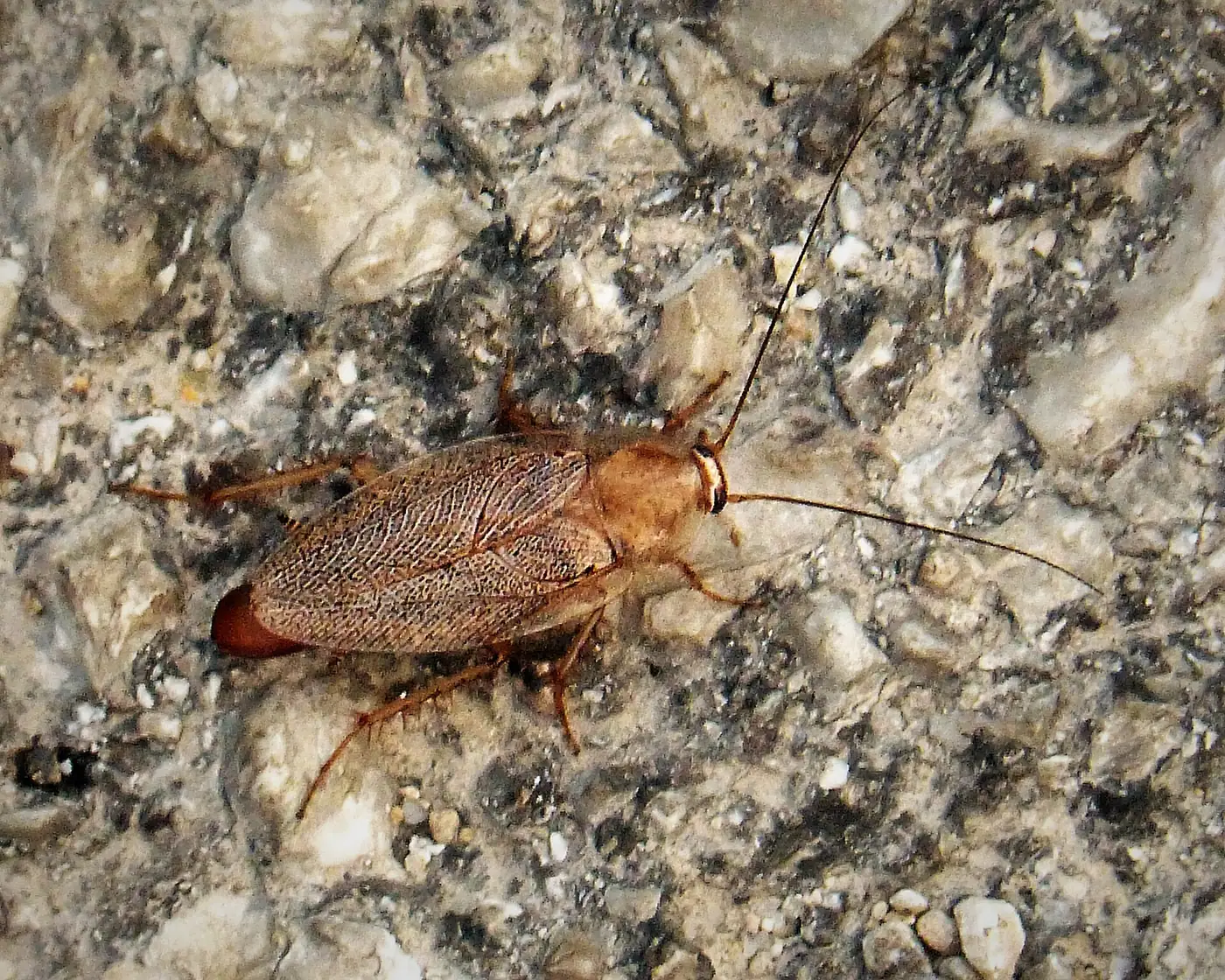
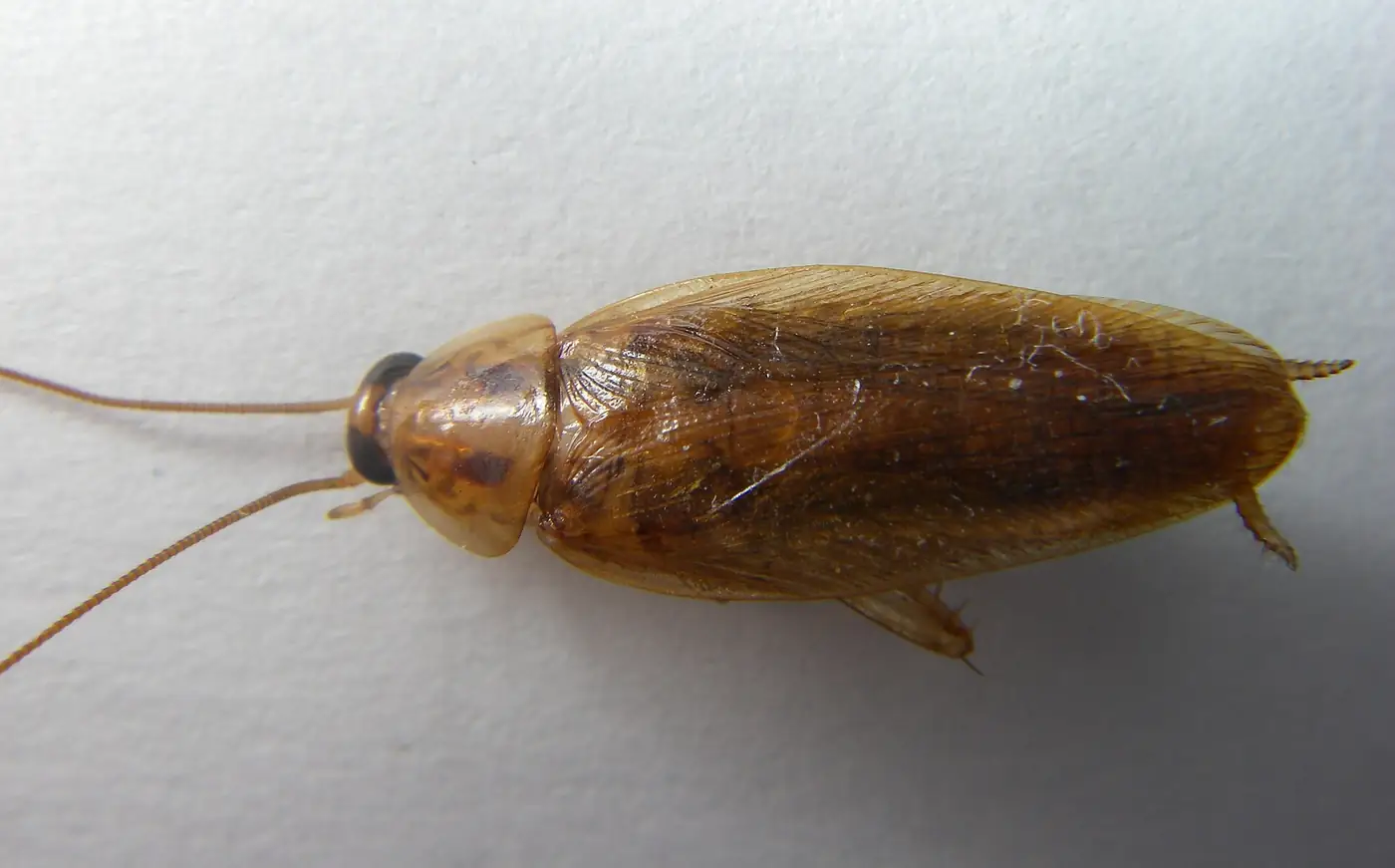
Two species turn up in Irish buildings. The German cockroach is small, light brown and lives in kitchens and bathrooms. The Oriental cockroach is larger and dark, and likes damp areas, basements and drains. Both are mostly active at night.
For every cockroach you see in daylight there are usually many more hidden nearby. Over-the-counter sprays tend to scatter them deeper into walls and neighbouring units, which makes the problem harder to treat.
What to look for
- Live cockroaches scattering when you switch on a light at night
- Pepper-like droppings or dark smear marks in cupboards and hinges
- Brown, purse-shaped egg cases behind appliances or under sinks
- Shed skins in corners and along cracks
- A musty, oily smell in heavier infestations
A hygiene and compliance risk
Cockroaches move between drains, waste and food surfaces, carrying bacteria such as salmonella and E. coli. Their droppings and shed skins are also a recognised trigger for asthma and allergies, particularly in children.
In a food business a single sighting can mean a failed inspection. We provide the documentation your HACCP plan needs.
How we deal with it
Inspection & monitoring
Sticky monitors and a close inspection of harbourage areas show us the species, the size of the population and where it is concentrated.
Gel baiting
Professional gel baits placed into cracks and voids. Cockroaches carry the bait back and share it, so it reaches insects you never see.
Growth regulator
Where needed, an insect growth regulator breaks the breeding cycle so eggs and nymphs don’t replace the adults.
Follow-up
Return visits two to three weeks apart, with fresh monitoring, until the counts reach zero.
Keeping it from coming back
- Don’t leave dishes, pet food or open bins out overnight.
- Fix dripping taps and condensation, because cockroaches need water daily.
- Seal gaps around pipes, under sinks and behind kitchen units.
- Check deliveries, second-hand appliances and cardboard boxes before they come inside.