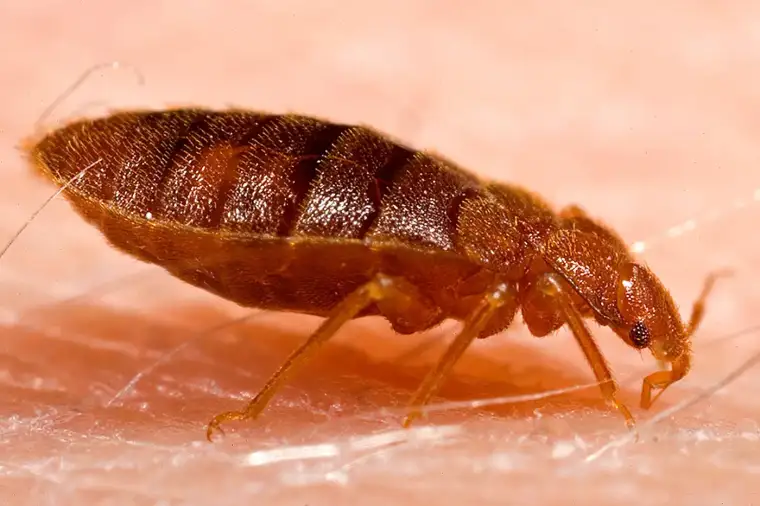
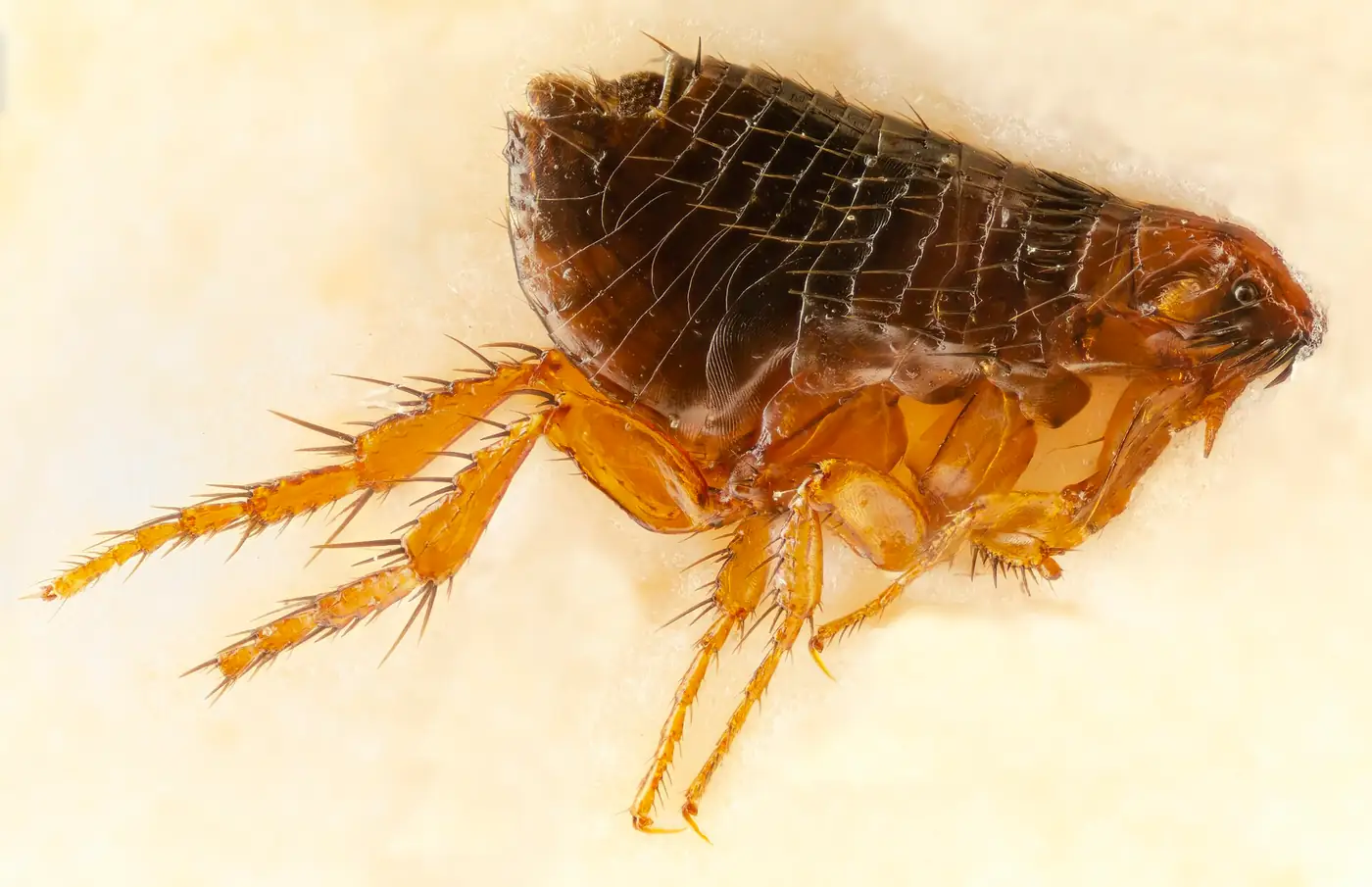
Most household infestations are cat fleas, even in homes with only a dog. Fleas lay eggs on the animal, and those eggs drop off wherever your pet sleeps and walks. Larvae hide deep in carpet pile and between floorboards before forming cocoons that can sit dormant for months.
That is why fleas often appear suddenly when people move into a property where a pet used to live, or come back from holiday to an empty house. The vibration of footsteps tells the waiting pupae a host has arrived.
What to look for
- Itchy red bites, usually around the ankles and lower legs
- Pets scratching, grooming excessively or losing fur
- Tiny dark specks (“flea dirt”) in pet bedding that turn red on damp tissue
- Small dark insects jumping from carpets or rugs
- Bites starting soon after moving into a new home
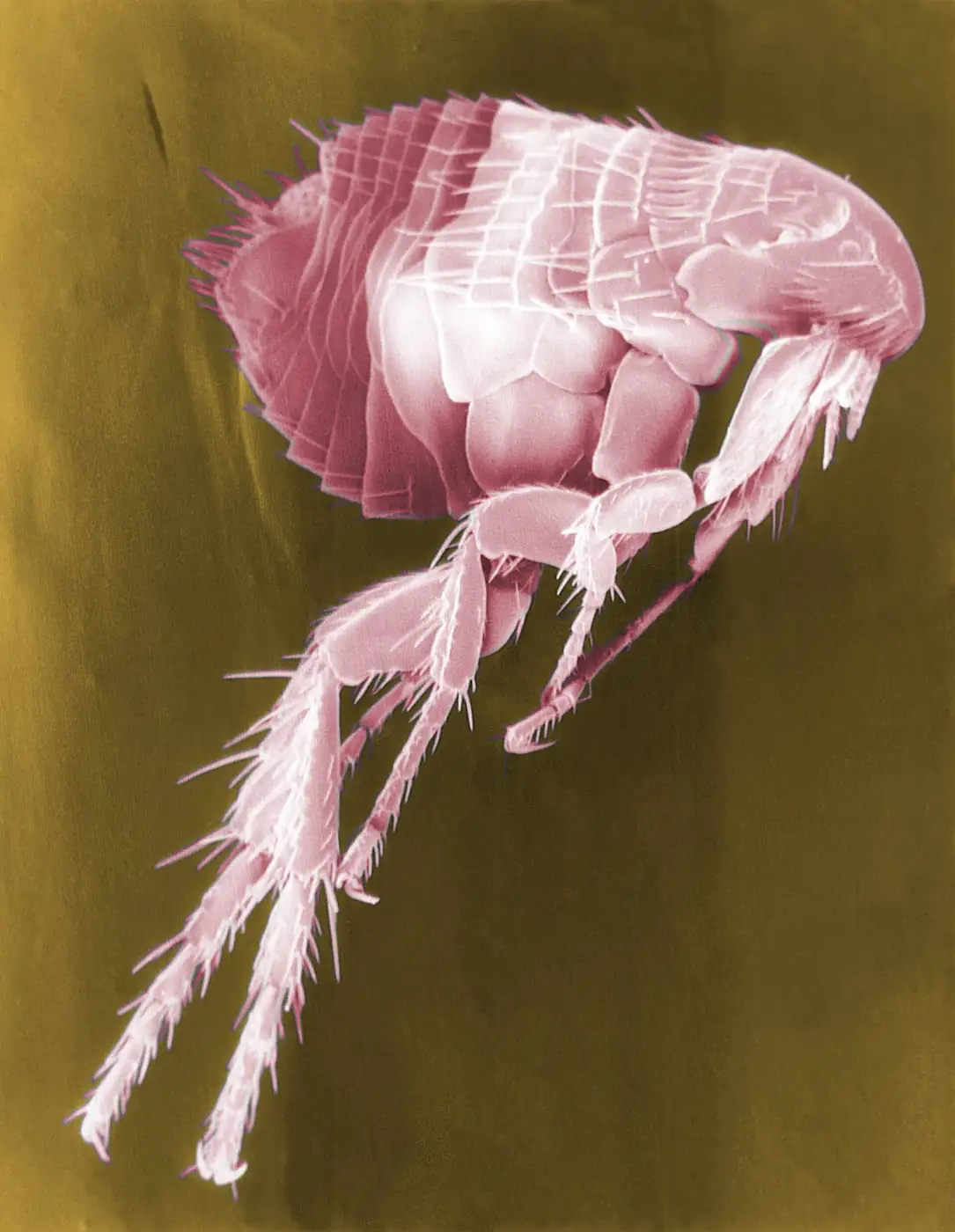
Why sprays from the shop fall short
Flea bites can cause intense itching, allergic reactions and secondary skin infections, and fleas can pass tapeworm to pets. Home foggers don’t reach under furniture or deep into carpet, where most of the life cycle happens, so the infestation keeps returning.
Our treatment pairs a residual insecticide with an insect growth regulator, which prevents eggs and larvae from developing into biting adults.
How we deal with it
Pets first
We ask that all pets are treated with a vet-recommended flea product before or on the day of our visit. Otherwise they bring new fleas straight back in.
Preparation
Clear floors, vacuum thoroughly (including under furniture and sofa cushions) and wash pet bedding at 60°C. We send a simple checklist.
Treatment
A residual spray with growth regulator applied to carpets, floors, skirting and soft furnishings where pets rest.
Aftercare
Vacuum daily for two weeks. It draws hatching fleas onto the treated surfaces. Avoid washing treated floors for 14 days.
Keeping it from coming back
- Keep every pet on a regular vet-recommended flea treatment, all year round.
- Wash pet bedding weekly on a hot cycle.
- Vacuum often, especially where pets sleep, and empty the vacuum outside.
- If you’re moving into a home that had pets, consider a treatment before you move furniture in.