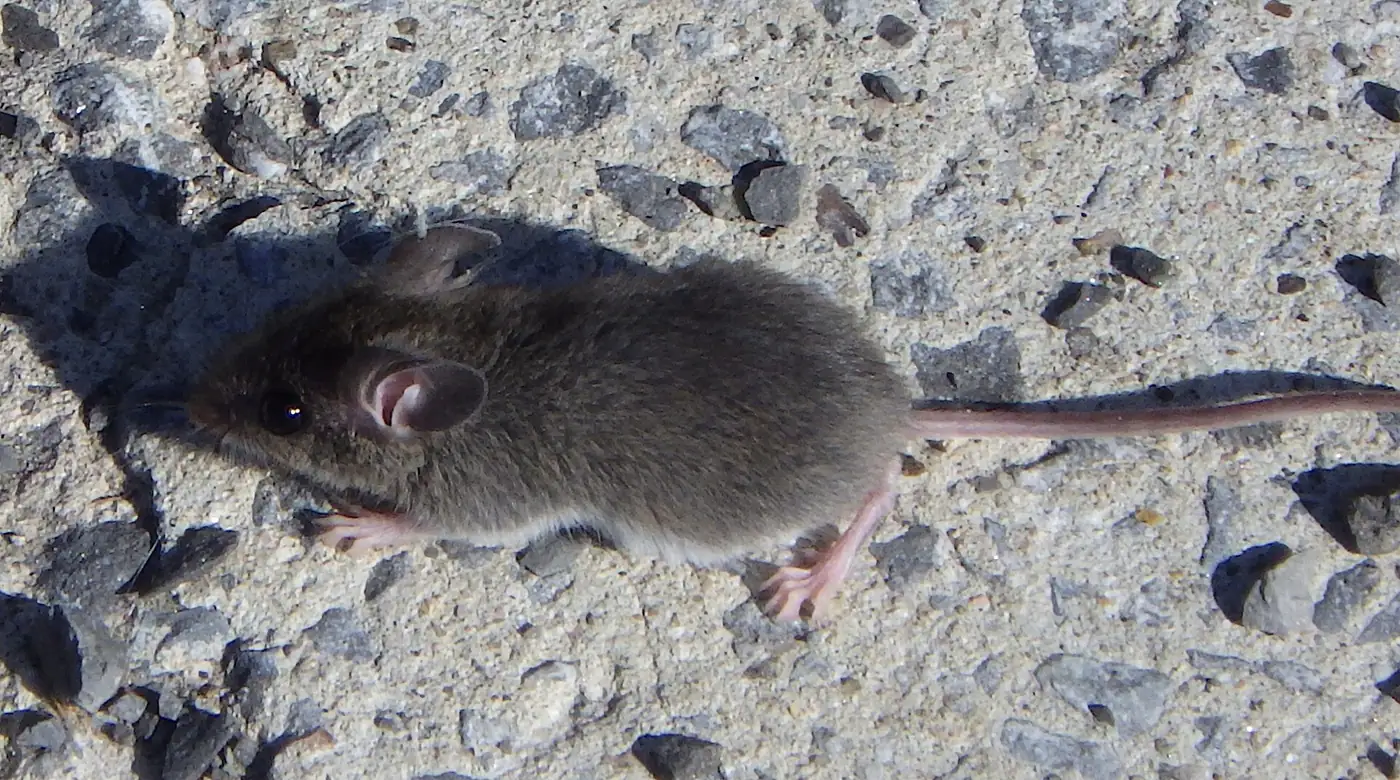
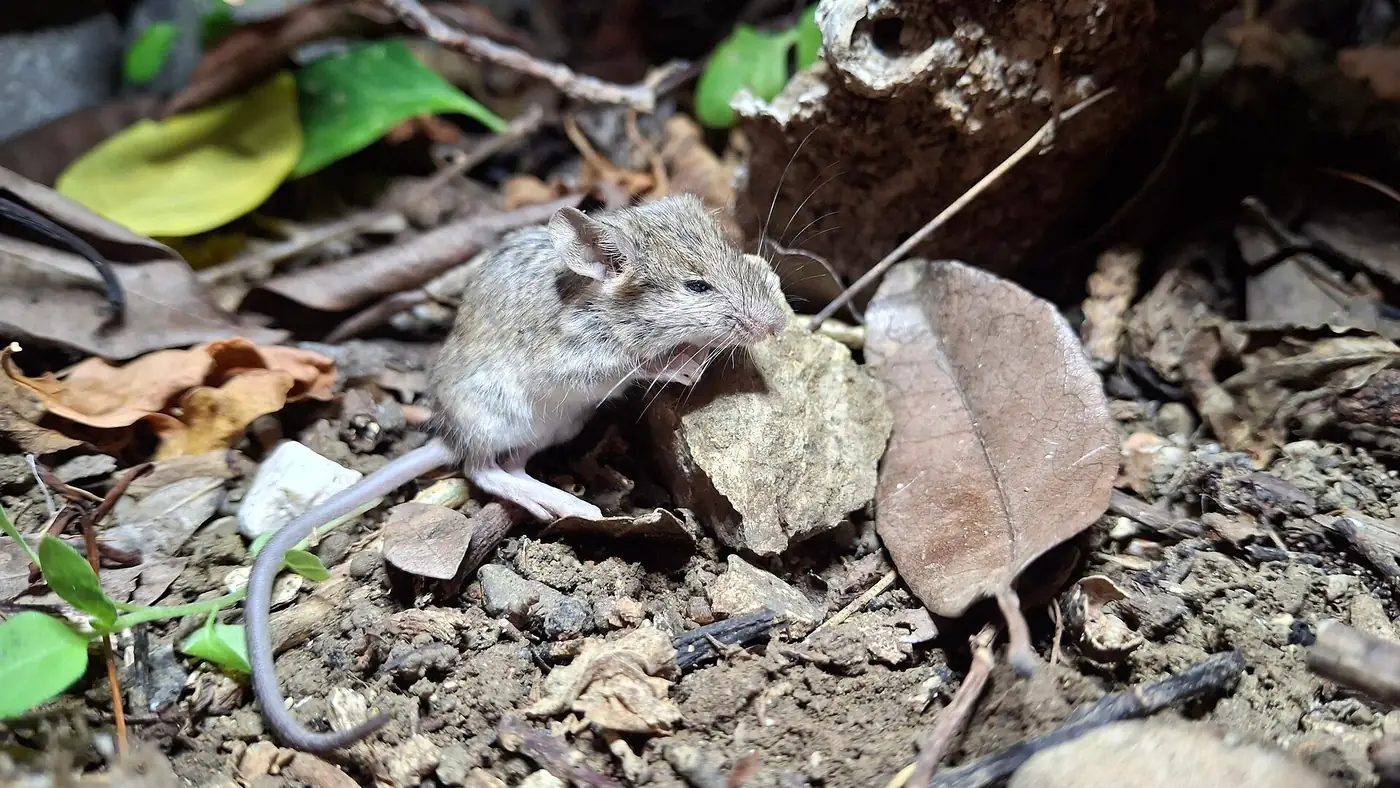
House mice (Mus musculus) move indoors from autumn onwards, looking for warmth and food. They nest in insulation, behind kitchen units, under floorboards and inside the backs of appliances, and they rarely travel more than a few metres from their nest.
Because mice nibble at many small meals, they contaminate far more food than they eat. A female can have a litter every three weeks or so, so two or three mice in October can be a serious infestation by Christmas.
What to look for
- Small, rice-grain droppings 3–6 mm long, often along skirting or inside cupboards
- Nibbled food packaging, especially cereals, pet food and baking goods
- Shredded paper, fabric or insulation used for nesting
- A stale, musky smell in enclosed spaces
- Light scratching in ceilings or walls at night
- Small greasy marks around holes and pipe entries
More than a nuisance
Mice carry salmonella and other bacteria and leave a constant trail of urine as they move. That is a real problem on food-prep surfaces. They also gnaw cables inside walls and appliances.
Shop-bought traps catch the mice you can see. They rarely deal with the nest or the way in, which is why mice often “come back” every winter.
How we deal with it
Inspection
We trace droppings and runs back to nesting areas and check the full exterior for entry points, often around pipes, vents, garage doors and under kitchen units.
Treatment
Secure bait stations and professional traps placed along active runs, out of reach of children and pets.
Proofing
Gaps sealed with wire wool, mesh, escutcheon plates and filler. Mice can’t chew through it.
Follow-up
Return visits to check activity, remove spent stations and confirm the property is clear.
Keeping it from coming back
- Store dry food in sealed hard containers, not bags or boxes.
- Clear crumbs from behind cookers, fridges and kick-boards.
- Fit brush strips to the bottoms of external and garage doors.
- Fill pipe and cable holes, even small ones, with wire wool and filler.