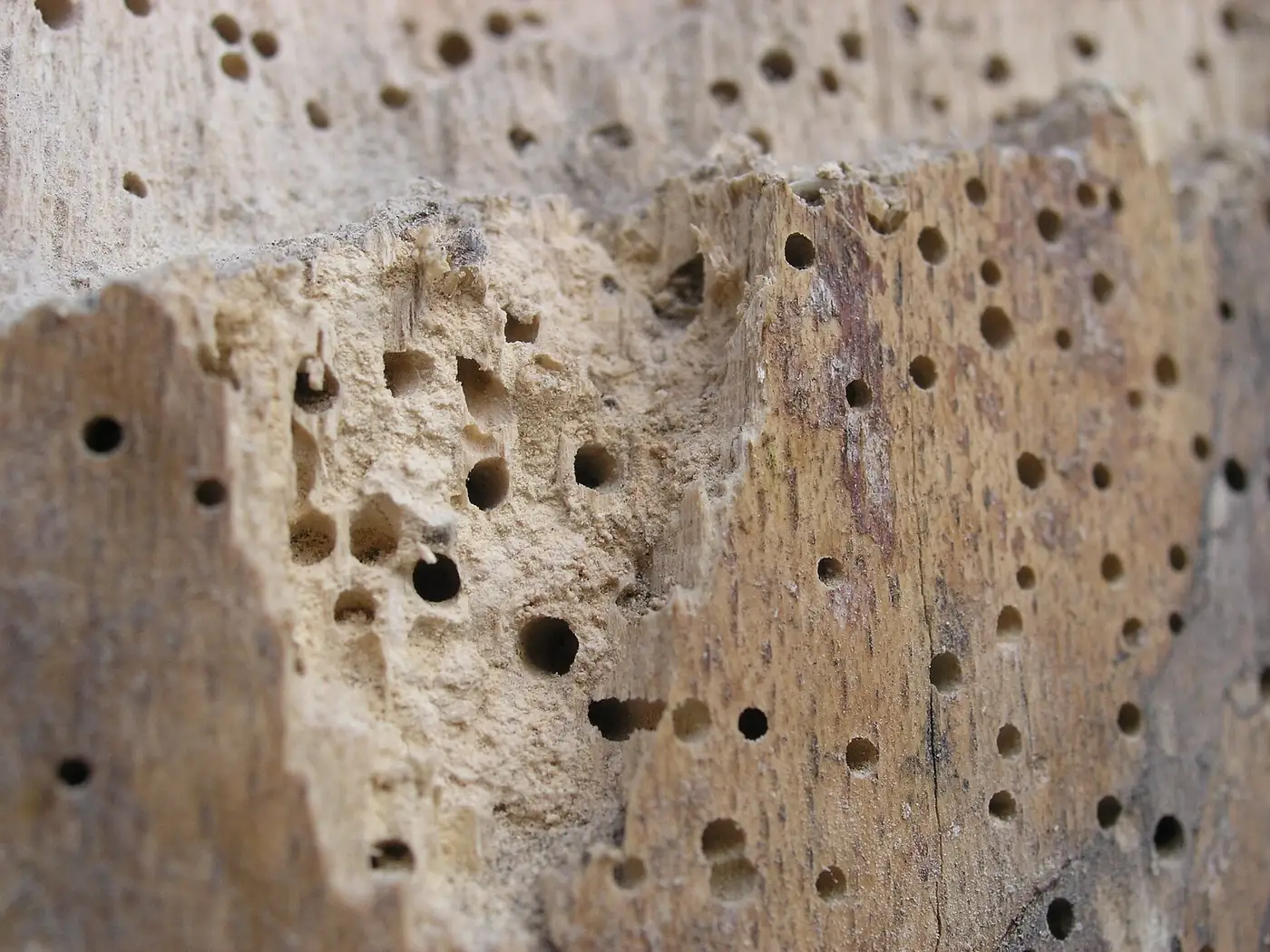
“Woodworm” is the larva of a wood-boring beetle. In Irish homes it is almost always the common furniture beetle (Anobium punctatum). The larvae tunnel inside timber for several years before emerging as adults, leaving 1–2 mm exit holes, usually between May and August.
Woodworm loves timber with a raised moisture content, so it is most often found in suspended timber floors, under stairs, in roof spaces and in older furniture. Old exit holes can stay in timber for decades after the beetles have gone, which is why a proper survey matters.
What to look for
- Small round exit holes, 1–2 mm across, with sharp clean edges
- Fine, gritty bore dust (frass) below holes or on the floor beneath timbers
- Small brown beetles on window sills in early summer
- Crumbling edges or soft spots in floorboards and joists
- Damp or poor ventilation in sub-floors and roof spaces
Slow damage, serious consequences
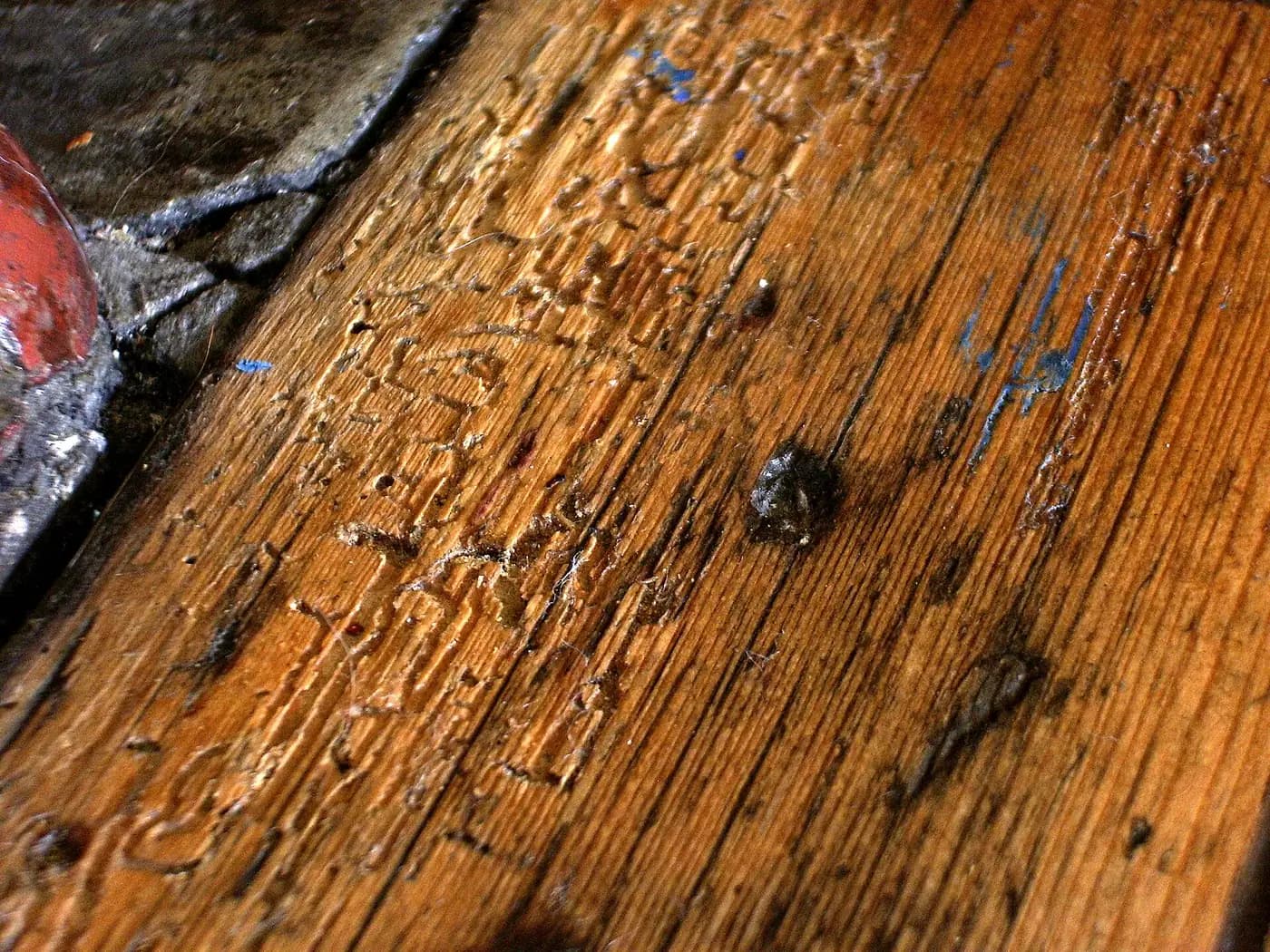
Left untreated over years, woodworm weakens timber from the inside. Floorboards, joists and roof timbers can lose strength long before the surface looks bad, and badly affected timber may need replacing.
Woodworm is also frequently flagged in pre-purchase surveys. A treatment with a written guarantee gives buyers, sellers and mortgage providers confidence.
How we deal with it
Survey
We inspect affected timbers, check for fresh frass and clean-edged holes to confirm activity, and take moisture readings.
Preparation
Floor coverings lifted and roof spaces cleared where needed so treated surfaces can be reached. We’ll agree exactly what is required beforehand.
Treatment
An approved water-based insecticide applied to exposed timber surfaces, which kills emerging beetles and larvae near the surface.
Advice & report
Guidance on any damp or ventilation issues, timbers that need replacing, and a written record of the treatment.
Keeping it from coming back
- Keep sub-floor vents and air bricks clear so timber stays dry.
- Fix leaks and condensation in roof spaces promptly.
- Check second-hand furniture for fresh holes and dust before bringing it in.
- Monitor known old holes. Fresh dust in early summer means activity.