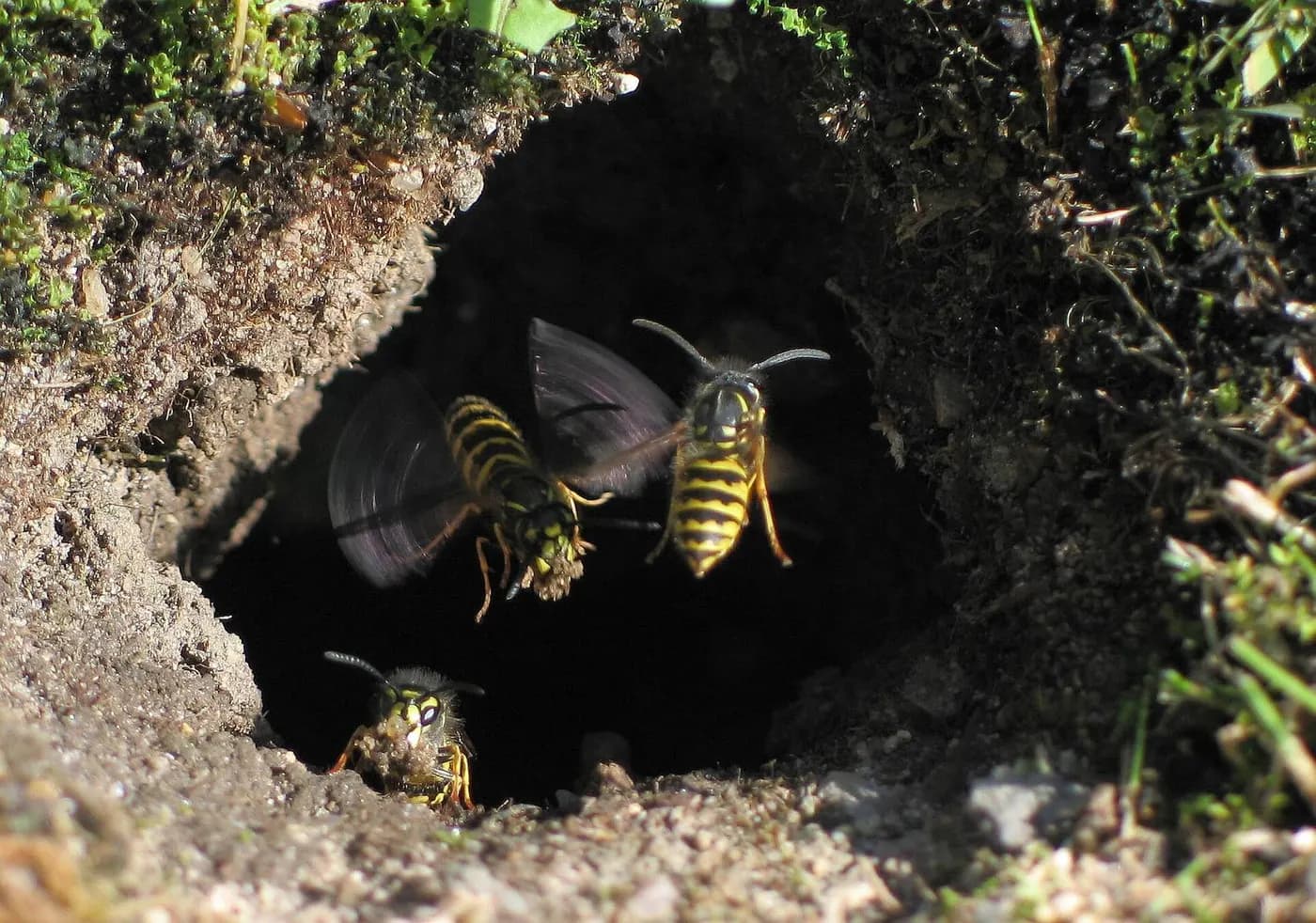
Two species cause most wasp problems in Ireland: the common wasp (Vespula vulgaris) and the German wasp (Vespula germanica). Each nest is started by a single queen in spring, built from chewed wood pulp, and by late summer can hold several thousand workers.
Nests are usually hidden: in roof spaces, under soffits and fascias, in wall cavities behind air bricks, in sheds, hedges and old rodent burrows in the lawn. Often the only sign is a steady line of wasps flying in and out of one gap. The colony dies off in autumn and the nest is never reused, but new queens spread out to start next year’s nests nearby.
What to look for
- A steady stream of wasps going in and out of one gap in a wall, roof or the ground
- A papery, grey-brown nest in a loft, shed, garage or under the eaves
- Wasps appearing indoors, in bedrooms or around light fittings in the attic
- A faint scratching or crackling from a wall or ceiling as wasps chew and build
- Rising numbers around bins, outdoor seating and fruit trees in late summer
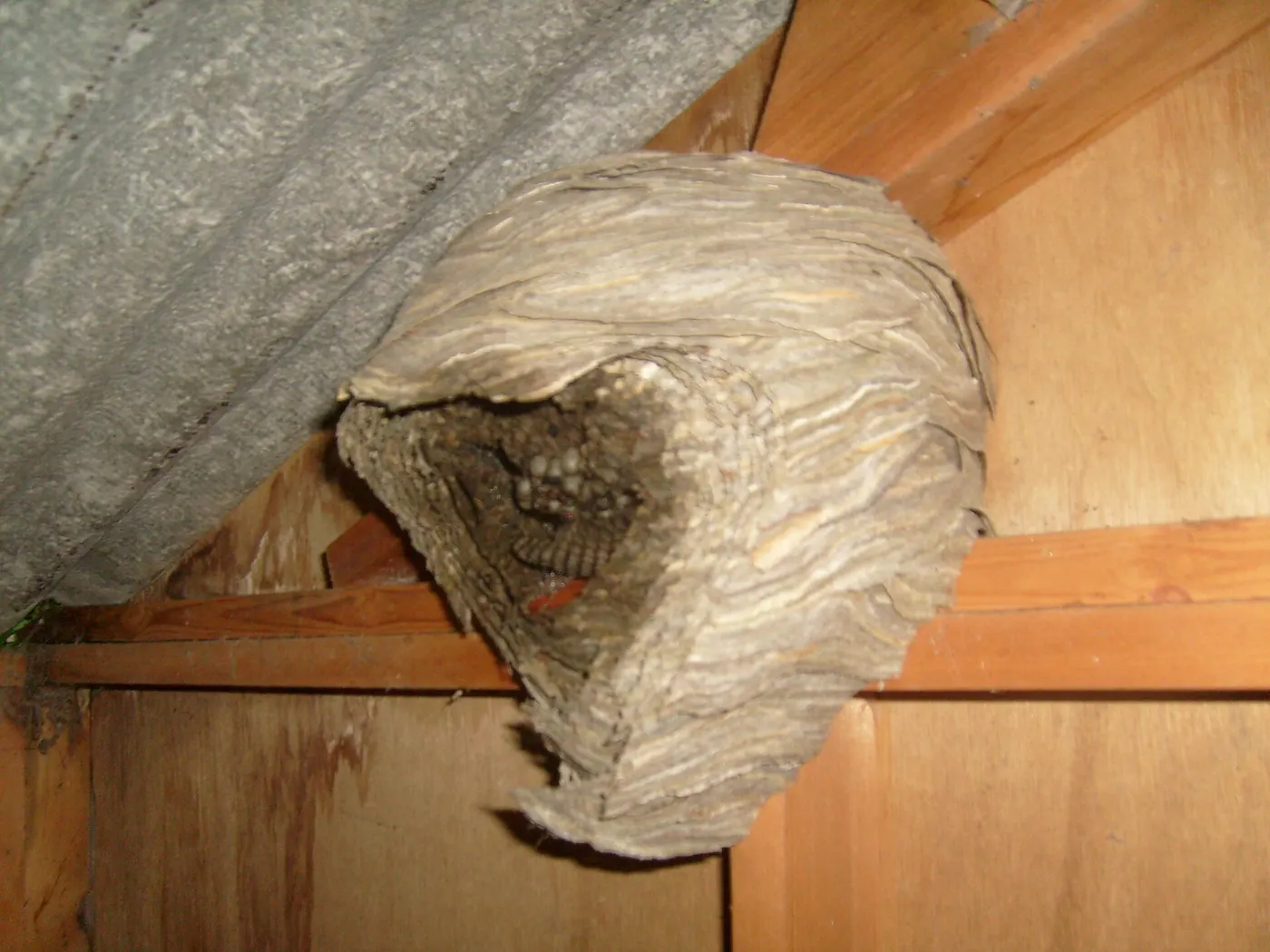
Why a wasp nest is best left to us
Unlike a bee, a wasp can sting again and again, and a disturbed nest releases an alarm signal that brings the whole colony out. For anyone with an allergy, a single sting can mean anaphylaxis. Knocking a nest down, blocking the entrance or spraying it from a ladder is how most serious stings happen. A blocked entrance can also push wasps into the house through ceilings and light fittings.
For businesses, a nest near outdoor seating, a kitchen door or a bin store is a sting risk for staff and customers and a contamination risk around food. We treat early in the day or out of hours where that suits you.
How we deal with it
Locate
We confirm they are wasps, not bees, and find the nest or the entrance the wasps are using, outside or from inside the roof space.
Treat
A professional insecticide dust is applied into the nest or its entrance, using extension poles for high eaves, so we rarely need to open up walls or roofs.
Clear
Returning wasps carry the dust through the colony. Activity falls within hours and the nest is usually dead within a day.
Remove if needed
Most nests can be left in place once treated. Where a nest is accessible and in the way, in a shed or loft, we can remove it after it has died.
Keeping it from coming back
- Check sheds, lofts and eaves in April and May, when queens start nests the size of a golf ball.
- Fill gaps in soffits, fascias and around air bricks before spring.
- Keep bins lidded and clear fallen fruit and sweet drinks from outdoor areas in late summer.
- Never block a nest entrance. The wasps will look for another way out, sometimes into the house.